
Communications

Superstorm Sandy - Stories of Recovery

Last week, two Superstorm Sandy affected homeowners participating in NYDIS’ and the Center for NYC Neighborhoods’ Temporary Housing Services (THS) program received the keys to their newly elevated and rebuilt homes.
Two companion resources tools, a Field Guide and a Religious Literacy Primer for Crises, Disasters, and Public Health Emergencies are a must for all emergency managers, disaster mental and public health providers and disaster human services personnel or volunteers.

Understanding how to communicate in a crisis will help you avoid mistakes that can undermine your credibility or result in confusion or even death. The key is staying connected with reliable public messaging and relaying it effectively to those who

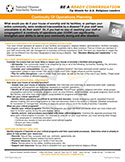
NDIN Tip Sheet: Continuity of Operations Planning

A continuity of operations plan (COOP) can significantly strengthen your ability to serve your community during and after disasters.

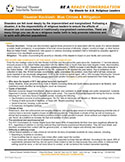
NDIN Tip Sheet: Disaster Backlash: Bias Crimes and Mitigation

There are many things you can do as a religious leader both to help promote tolerance and to work with affected populations. This tip sheet shows you how.

HOWCALM

HOWCALM is a secure, user-friendly, web-based management tool that identifies and inventories the physical assets, programmatic resources, and volunteers that houses of worship, religious schools, and faith-based service providers can activate and deploy in the event of a disaster.

Based on NYDIS’ HOWalert system, the virtual part of the exercise was developed to test the Faith Sector’s ability to rapidly communicate with congregants, staff, and clients during a life-threatening public health emergency. The in-person training offers an introduction to